Showing posts with label reishi. Show all posts

Wednesday, June 17, 2009

Reishi Mushroom Facts


Did you know that Reish Gano (RG) - Ganoderma Lucidum (GL) has the ability of giving us a medical check-up and finding hidden diseases in the body?

It can then remove the toxins and enable the body to become the best doctor to treat a wide spectrum of diseases with the natural immune system.

RG - GL basic functions are to cleanse the blood: remove toxins; boost the function of the kidney; protect the liver; strengthen the heart; and cleanse the colon.

It also acts as a relaxant with anti-cancer properties.

Red Reishi has more than 200 active elements which can be divided into three categories with ratio of:

30% water-soluble elements
65% organic soluble elements
5% volatile elements.

The effects of Reishi on the body have to go through five (5) stages:

Scanning (1-30 days) - Reishi helps to detect hidden disease and toxins in the body and proceed to regulate the body functions. During the process, the body will show symptoms- known as 'ailment reflection". This reaction is not a side effect, but to help us identify the ailing area. This is the scanning effect of Reishi Gano.

Cleansing-Detoxification (1-30 weeks) - Purple Reishi is known as "King of toxin removers" for its power to remove excessive uric acid, lactic acid, excess cholesterol, fat deposits, dead tissue and toxins accumulated in the body. Toxins are discharged through the circulation system - (kidney and liver) by urination and stool, through perspiration, boils, rashes, phlegm and mucus.

Regulation (1-12 months) - During the restoring process, many reactions can be observed. Do not be alarmed, this is the sign of the body healing itself. If the reaction is too strong, reduce the dosage.


Building-Recovery (6-24 months) - Reishi will continue to repair the affected body parts, and strengthen the immune system to be more resistant to diseases. It also supplies the essential elements and vitamins for speedy recovery.

Rejuvenation (1-3 years) - The ultimate aim of consuming Reishi is to maintain the body functions at its optimum and restore youthfulness.

Reishi Mushrooms - The Medicine of Kings


For over 2000 years Reishi mushrooms (Ganoderma lucidum) have been recognized by Chinese medical professionals as a valuable remedy. Its Chinese name Lingzhi, means "spiritual potency". Reishi mushrooms are regarded by the Chinese as the "Medicine of Kings". Dr. Shi-Jean Lee, the most famous Chinese medical doctor of the Ming Dynasty, strongly endorsed the effectiveness of Reishi in his famous book, Ban Chao Gang Moo ("Great Pharmacopoeia"). He stated that the "long-term taking of Reishi (Lingzhi) will build a strong, healthy body and assure a long life."(1)

A Mushroom for the Nerves
Reishi mushrooms have been traditionally recommended by Chinese and Japanese herbalists for insomnia due to their "sleep-promoting factor".(2) Long-term use causes a significant promotion of slow wave sleep1. Reishi mushrooms are prescribed in China for a number of psychiatric and neurological afflictions, including diseases involving the muscles, anorexia, and debility following lengthy illnesses.(3)

In Japan, the dried "mycelium" of Reishi the root-like body that produces mushrooms has been found to be highly effective in the treatment of neuroses caused by "environmental stress".(2) In addition, in an eight-month study of Alzheimer's disease, patients taking a Reishi mycelium product demonstrated significant improvement.

In China, Reishi is used for its muscle relaxing and analgesic (pain-inhibiting) effects. In one study, Reishi alleviated anxiety in 18 of 20 patients after four months' use. It was concluded that the mushroom has an essentially "calmative function", but is neither a narcotic nor a hypnotic.

Reishi as a Cardiotonic
For centuries, Reishi has been known as a cardiotonic herb. It was prescribed routinely to those with a "knotted and tight chest" symptoms consistent with both stress and/or coronary artery disease-related angina. Researchers in China found that Reishi improved the blood flow and lowered oxygen consumption in the heart muscle.(3) Similar results were also found by Japanese scientists.(2,4) They found that Reishi contains ganoderic acids (which belong to a group of natural substances called "triterpenes") which lower high blood pressure, lower cholesterol, and inhibit platelet aggregation (the clumping together of blood cells), which can lead to heart attacks and other circulation problems. In fact, Reishi's triterpenes are so important that in Japan they are used to determine Reishi's quality and authenticity.

In a six-month clinical trial performed in a university hospital in Tokyo, nearly half (47.5%) of 53 hypertensive patients lowered their blood pressure by 10-19 mmHg, and 10% of the subjects dropped their pressures 20-29 mmHg (both systolic and diastolic readings) after taking Reishi extract.1 Similar results were observed in a Chinese clinical trial without any side-effects.(2) Another large Reishi study in China found that low density lipoprotein (LDL the harmful cholesterol) levels dropped in 68% of 90 patients following only one to four months of Reishi use.

Recently, Russian scientists have taken an interest in Reishi. They found that in addition to all the cardiovascular benefits mentioned above, Reishi showed a significant preventive and therapeutic action against plaque build-up ("plaque" is a fatty goo which is comprised of a combination of oxidized cholesterol, calcium, and degenerated white blood cells ["foam cells"]. It is deposited on the walls of arteries which restricts blood flow by narrowing the passage within arteries resulting in atherosclerosis).

Reishi in Cancer Research
Studies of Reishi in cancer research have been largely conducted in Japan, where Reishi was scientifically proven to have an anti-tumor effect. This research has continued in Korea, Japan, and China.

An example of Reishi's cancer-fighting potential occurred in the summer of 1986. A 39 -year old Japanese woman approached Dr. Fukumi Morishige, M.D., Ph.D, a renowned Japanese surgeon and a member of the Linus Pauling Institute of Science and Medicine, for help in treating her lung cancer. It was a complicated case, and she had been refused an operation by several hospitals. Hopeless, she returned home where she found her husband had collected Reishi in the forests. He boiled the mushroom and gave it to her to drink as a tea.

While this was going on, she begged Dr. Morishige to do something for her cancer, regardless of its very advanced stage. From what was evident six months earlier, Morishige was surprised when he found no increase in swelling. Then he looked at her X-rays. Something wasn't right: her tumor showed as only a trace on the X-ray. When she told him she had been drinking Reishi tea, Morishige operated with great curiosity. He was "astonished" to find only scar tissue, and although cancerous cells remained, they were now benign.

That was the impetus for Dr. Morishige to begin his studies of Reishi as a treatment for cancer especially cases given up as hopeless. Dr. Morishige now believes that Reishi is also an effective cancer preventive. The active anti-cancer constituents in Reishi are called Beta-D-glucan. Beta-D-glucan is a polysaccharide basically a huge sugar molecule made up of many little sugar molecules chained together bound to amino acids. These intricate sugars stimulate or modulate the immune system by activating immune cells such as macrophage and helper T-cells, as well as increase the immunoglobin levels (immunoglobins are specific types of antibodies) to produce a heightened response to foreign cells, whether bacteria, viruses, or tumor cells.

One interesting and important finding by Dr. Morishige was that the effectiveness of Reishi could be increased by combining it with high doses of vitamin C. Polysaccharides are huge molecules absorbed by the body with difficulty. Vitamin C helps to break down these huge molecules to much smaller molecules called oligoglucan, which can be easily absorbed. Vitamin C thus increases the bioavailablity of Reishi, and therefore, synergistically increases Reishi's immune-stimulating and anti-cancer effects.

Anti-Allergic /Anti-Inflammatory Actions
During the 1970s and 1980s, Reishi's anti-allergy action became the subject of ongoing research in both China and Japan. Studies showed that Reishi extract significantly inhibited all four types of allergic reactions, including positive effects against asthma and contact dermatitis. In 1990, researchers at the University of Texas Health Science Center in San Antonio found that Reishi could be effectively used in treating stiff necks, stiff shoulders, conjunctivitis (inflammation of the fine membrane lining the eye and eyelids), bronchitis, rheumatism, and improving "competence" of the immune system without any significant side-effects.(6)

Part of the anti-inflammatory effect of Reishi may be due to its free radical scavenging effect. Reishi extract significantly elevates the free radical scavenging ability of the blood, especially against the particularly harmful hydroxyl radicals. The hydroxyl radical scavenging effect of Reishi is so strong that even after the Reishi extract was absorbed and metabolized the scavenging action still continued.

Healing the Liver
Reishi is commonly prescribed in China for the treatment of chronic hepatitis. In treatments lasting 2 to 15 weeks, the overall rate of efficiency was 70.7 to 98.0%.(4) In Japan, Reishi extract has been reported to be effective in treating patients with liver failure.(2) In animal studies of mice with carbon tetrachloride-induced hepatitis, the extent of liver damage was significantly inhibited by continuous dosing with Reishi tincture, and the regeneration of the liver was promoted.(7)

Recent Applications
As the "Medicine of Kings", Reishi is widely used for different purposes. It is used for symptomatic relief of arthritis and of menopausal anxiety. It is also used in treating allergic asthma, hypertension, hypothyroidism, bronchitis, insomnia, general anxiety and stress, and cardiovascular problems. Reishi also is often the main ingredient in herbal formulas for immune dysfunction syndromes, such as Chronic Fatigue Syndrome.

Dosage
hinese medical texts traditionally call for using 1.5 to 9 grams of dry mushroom per day which approximates to 150 to 900 mg of concentrated Reishi extract.(2) For serious problems like cancer, Dr. Morishige adjusted the dosage from 2 to 10 grams of Reishi extract per day.(2,5)

(courtesy - supranutra.com)

Thursday, June 4, 2009

Reishi Tea Benefits


Reishi Tea Benefits have been acknowledged since ancient times as being potent in preventing and curing a host of ailments and diseases. Reishi is an herb that has been cited for thousands of years as being a tonic for emperors. Reishi has been known in traditional Chinese medicine as a "cure-all" herb or a "panacea tonic" due to its potent ability to benefit the vital energy or "qi".

According to Shen Nong's "Herbal Classic" and "Compendium of Materia Medica", the two monumental works in Chinese medicine, reishi is rated the best and most superior of all Chinese herbs. Reishi has somewhat mystical reputation in ancient China as being an "Immortal Herb" and is though to have such effective curative properties that it "brings the dying back to life".

Reishi is acknowledged as possessing anti-tumor, anti-diabetic, anti-parasitic, anti-fungal, anti-inflammatory, anti-viral, anti-allergenic and anti-hypertensive properties.

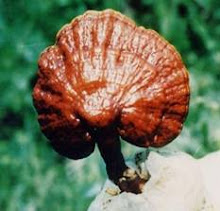
Known officially as Ganoderma Lucidum and in China as lingzhi, reishi is a polypore mushroom that grows in dark forests, deciduous trees and logs. It has a red-varnished, kidney-shaped cap, and also has pores underneath. Reishi is classified according to its color and shape, and each individual variety is believed to protect and nourish a different body organ. The classifications of reishi are: red (heart), green (liver), black (brain and kidney), white (lungs and skin), purple (joints), and yellow (spleen).

Reishi contains the following constituents: triterpenes, polysaccharides, alkaloids, lactones, mannitol and various vitamins and minerals.

Reishi tea can be made by placing about 5 grams of dried reishi mushroom herbs in about 6 to 8 ounces of boiling water. Allow the mix to boil for about 5 to 10 minutes. Then allow the resultant reishi tea to simmer for a further 2 to 3 hours. Then strain and enjoy.

The following are the health benefits attributed to reishi tea:

Reishi Tea may help in the treatment of heart diseases by lowering cholesterol and may thus help in impeding arteriosclerosis.

Reishi Tea may have certain anti-cancer properties as it enhances the human ability to fight abnormal cells and may improve the synthesis of protein and nucleic acid.

Reishi Tea may help relieve cough and asthma.

Reishi Tea may help sooth the mind and sedate the nervous system, thereby giving way to restful sleep and relaxation.

Reishi Tea may help in the nutrition of cells, thus delaying the aging process.

Reishi Tea may have beneficial effects on sufferers of diabetes, skin allergy and duodenal ulcers.

Reishi Tea may help in alleviating pain and discomfort associated with chemotherapy.

Reishi Tea may have protective properties on the liver and thus, may help in the fight against acute and chronic hepatitis.

(Source - www.teabenefits.com)

Saturday, May 23, 2009

Reishi Liquid - DXN Coffee & DXN Tea


Reishi liquid is the medicinal extract found in the Ganoderma (also known as Reishi) mushroom. Known as "spirit medicine," Reishi liquid has been used in Chinese medicine for 4,000 years. It is one of the rarest and most respected mushrooms used in medicine. Due to its scarce existence, Reishi liquid (deriving from the Ganoderma or Reishi mushroom) was once very expensive and rarely available. Due to the advancements of indoor growing, this miraculous herb continues to thrive under the close supervision of greenhouse settings. Reishi liquid, though nearly impossible to find at one time, is now both affordable and accessible to many. DXN, a company who distributes Gano (or Reishi) coffee, is said to have the worlds largest organic Ganoderma plantation.

Reishi liquid is used to treat a wide range of illnesses, including coronary disorders, allergies, allergic reactions, lung and liver disorders, HIV/AIDS, stress and cancer. Many patients, who have been diagnosed with cancer, look to Reishi liquid for its ability to lessen the discomfort of chemotherapy treatments. In fact, Reishi liquid is thought to have the ability to prevent the reoccurrence of cancer due to its ability to strengthen the immune system. When functioning properly, the immune system is designed to detect and fight against harmful viruses and other infections before they cause damage to the body. For this reason, many people begin a treatment regimen involving Reishi liquid as a preventative method to avoid future illnesses.

Individuals who suffer from stress related symptoms, including fatigue, loss of concentration and sleep deprivation may consider Reishi liquid as it promotes an overall improvement in mental health while lessening the effects of stress.

Reishi liquid is one of the main ingredients in Gano Cafe, which is a coffee that combines Ganoderma (also known as Reishi) mushroom extract and Brazilian roasted coffee beans. The absence of side effects combined with a natural healing ability have enabled this coffee to be mentioned as "The Worlds 1st Healthy Coffee." Reishi liquid has also shown to provide comfort for allergy sufferers and allergic reactions. Cosmetically, Reishi liquid may benefit those who wish to have improvements in skin tone, reduction in acne, fine lines and age spots.

Any persons who decide to begin a treatment involving Reishi liquid should expect to experience some type of reaction, which may appear within a few days or months following the onset of treatment. This article should, in no way, be considered as medical advice or instructions. A licensed medical doctor should be consulted before beginning any new treatment regimen, including that which consists of Reishi liquid.

Thursday, May 14, 2009

What is Reishi ?


Red Reishi (Ganoderma Lucidum), commonly known as Ling Zhi in Chinese, is a herbal mushroom known to have miraculous health benefits.

It has been used in Japan and China for over 2,000 years and thus making it the oldest mushroom known to have been used as medicine. Since ancient times, the Reishi mushroom was reserved for emperors and royalties. It has been revered as nature’s rarest and most beneficial herb. In the Superior category of Shen Nung Ben Cao Jing, the oldest and most famous medical text on Oriental herbal medicine, red Reishi is ranked as the number one herb, ahead of ginseng, because of its following qualities:

1. It is non-toxic and can be taken daily without producing any side effects.

2. When it is taken regularly, it can restore the body to its natural state, enabling all organs to function normally.

3. Immune modulator - regulates and fine tunes the immune system.

What are the benefits of Reishi?
Red Reishi is primarily composed of complex carbohydrates called water-soluble polysaccharides, triterpeniods, proteins and amino acids. Researchers have identified that water-soluble polysaccharides are the most active element found in Red Reishi that have anti-tumour, immune modulating and blood pressure lowering effects.

Another major active ingredient found in Red Reishi are triterpenes , called ganoderic acids. Preliminary studies indicated that ganoderic acids help alleviate common allergies by inhibiting histamine release, improve oxygen utilization and improve liver functions. Triterpenes are bitter in taste and the level of the triterpene content contained in a product can be determined by the bitterness.

Regular consumption of red Reishi can enhance our body's immune system and improve blood circulation, thus improving better health conditions. Generally, Reishi is recommended as an adaptogen, immune modulator, and a general tonic. Red Reishi is also used to help treat anxiety, high blood pressure, hepatitis, bronchitis, insomnia, and asthma. A full list of reported benefits can be found here.

Is there any evidence?
A considerable number of studies in Japan , China , USA , and the UK in the past 30 years have shown that the consumption of red Reishi has been linked to the treatment of a vast range of diseases, common ailments, and conditions. From asthma to zoster, the applications of red Reishi seem to be related to a multitude of body organs and systems.

However, most of the scientific research that has been conducted appears to strongly support red Reishi's role as a normalizing substance - a nutritional supplement that can yield medical benefits through its normalization and regulation of the body's organs and functions.

The role of Red Reishi in maintaining a healthy lifestyle can best be explained through the Traditional Chinese Medicine (TCM) point of view because none of the known active components taken alone is as more effective than the consumption of Reishi itself. Whereas Western medicine focuses on the “cure” after the disease has already occurred, TCM, established through over 2,000 years of human observation, focuses on disease prevention by sustaining the right balance within the body through proper nutrition, exercise, and meditation. Reishi is an important adaptogenic herb in TCM in helping the body maintain this balance and also restore the balance when one is sick.

For scientific studies done on Reishi please see the Research or Articles section on www.reishi.com